
☞ As-tu de la difficulté à lire cette page? Active la fonction « traduction » de ton navigateur. Besoin d’aide? Voici mon guide 😉

☞ If you dislike defacing your books, flagging is a great way to mark passages important to you or to highlight the recurrence of themes in a book without making them permanent. Read on for my best tips when using flags.
● Content
- How to flag
- Flagging systems
- Non-fiction books
- Fiction books
- Reading key
- Pacing method
- Bookmarking
- What flags to use
● How to flag
☞ As per Wikihow:
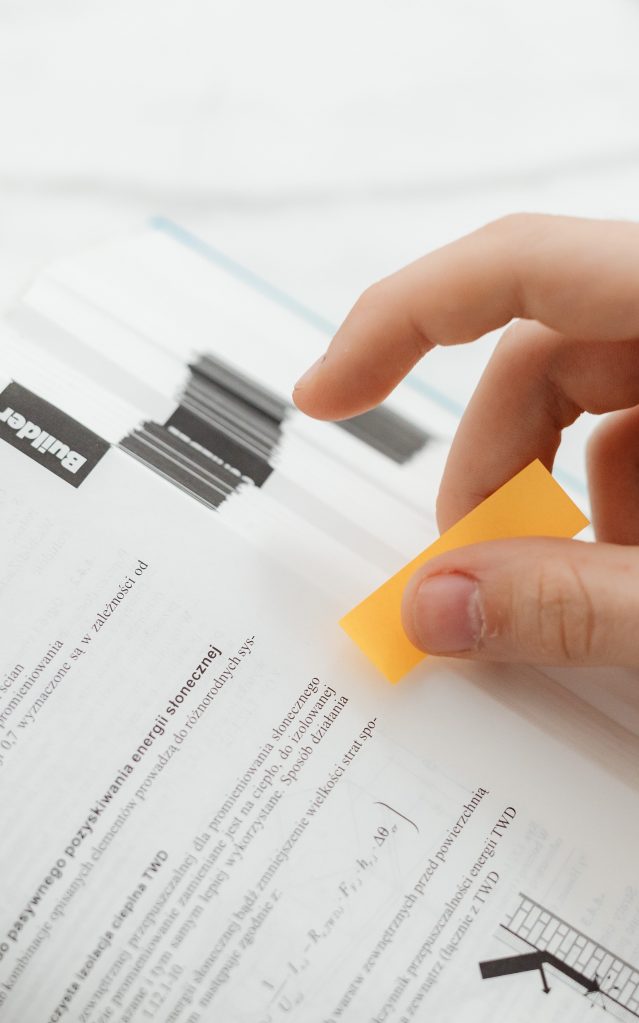
- Take a non permanent stiky paper
- Unstick it from its package
- Place it on the page or passage of interest
- Done. You have now conserved a location on this book.
☞ Jokes aside, flags are a great way to colour code you reading in a discreet way. They make navigating a book much more handy. And depending on your book, you might want to flag differently, for example a non-fiction versus a fiction book.
● Flagging systems
☞ I use flags differently in my book. Here are examples of how I use them for different readings objectives.
Non-Fiction books
⟹ You’ll want to highlight locations in the book to help you grasp the content of the manual, reference book, textbook, or philosophy book:
- the table of content
- the glossary (which if not present can be built by you)
- the synthesis pages
- the pages you have questions about or struggle with
- the pages where they explain key concepts
- the pages that have important graphics, maps, or diagrams
fiction books
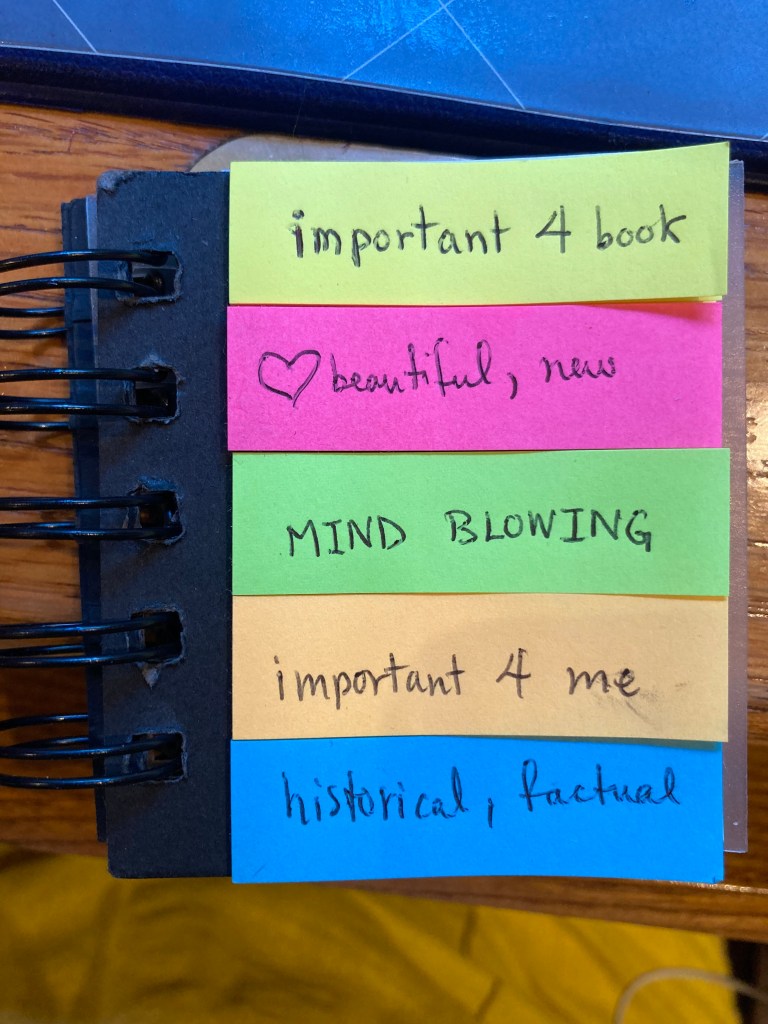
⟹ You’ll want to adapt this depending on the book you’re reading, but this is my general use of colour :
- yellow: something important to the understanding of the book (like a recurring theme)
- pink: a new word, a beautiful quote, a well made description
- green: something important from the book, a big takeaway, a mindblowing statement
- orange: something important to me
- blue: a historical name, date or fact, a reference to another work
Reading Key
☞ Making a key at the beginning of your book will lay out the meaning of each colour. This will also help you structure your reading and be on the lookout for targeted information. You might want to track other things like:
- Symbols
- Use of colour
- A particular word or a lexical group
- Use of poetry or rhetorical figures
- Presence of certain characters
- Use of a dialogue, grammar patterns, syntax style
- A theme specific to this story/genre
- A change in narration type or narrator
- Etc, literature is as diverses as there are authors
Pacing
☞ If I have a big book to read or a heavy reading for school, I’ll try to read a minimum of pages each day to make sure I finish on time.
☞ So I’ll put flags at every 30 pages (my average) to make sure I meet my daily goal.
Review
☞ Flag the passages you want to re-read, memorize, analyze further. This will help you focus your absorption of the material.
Bookmarking
☞ Let’s not forget the most basic use: flags can help you mark the last place where you stopped your reading 🔖 Maybe you like to see how far you can get in one sitting?
● What flags to use
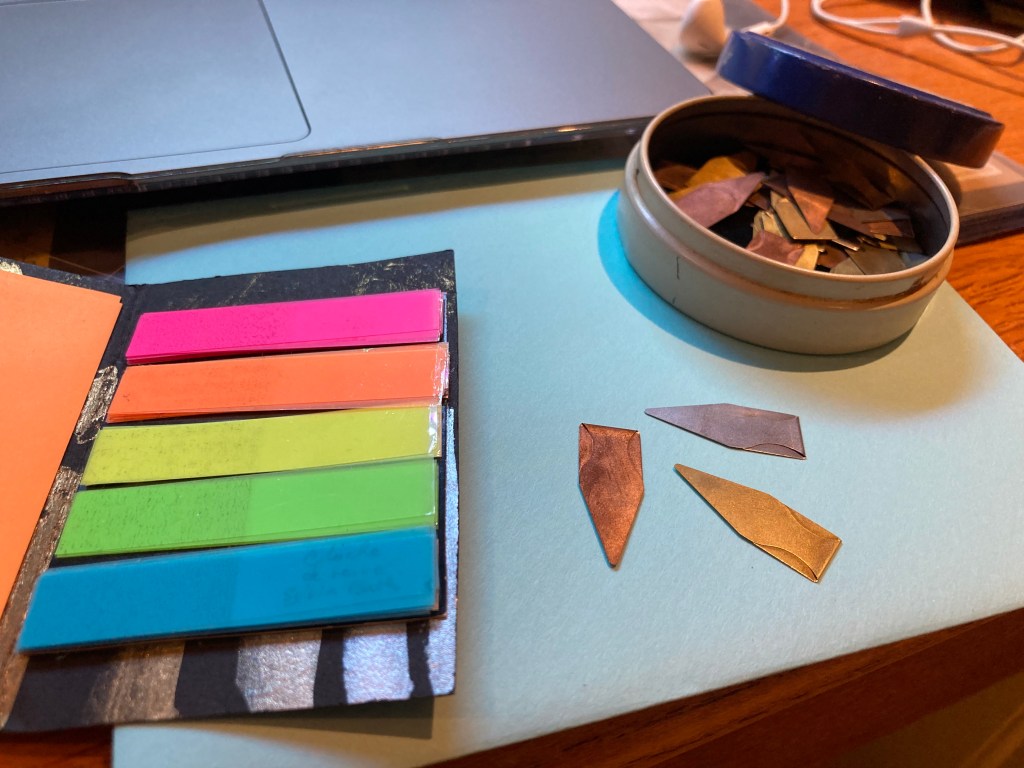
☞ I always carry sticky flags that I can quickly paste onto a page if I find something interesting or worth retaining. I normally get the most standard ones that can be found in any store with the colours pink, orange, yellow, green, and blue. These colours really suit me especially since they are roughly mirrored by highlighter pens and highlighting colours on Kindle or the Book app for Apple.
⟹ Here’s a list of simple and fancy sticky flags for all tastes:
- Metal nibs
- Regular sticky notes
- Fancy golden
- Neutral sepia toned
- Shaped in funky ways
- Shaped like cats
● Recap/Récapitulation
☞ Wether for improving your learning, understanding, or reaching of a goal, sticky flags are a great non-permanent way to make highlights in your books.
● Questions & Comments 😄💬 Let’s Chat
☞ What use do you have for your flags?
☞ What is your favourite brand or style for flags?
☞ What’s your best takeaway from this post?
★ Click on the star to show you liked this post 🙏😊 it encourages me so so much.


Leave a comment